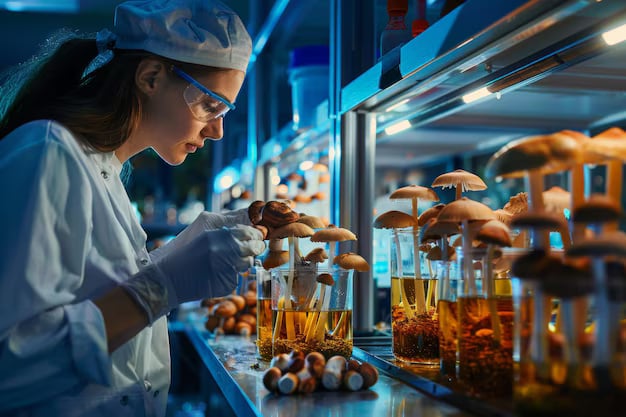
The Role of Sterility in Mushroom Cultivation: Why Clean Rooms Matter Learn why sterility is essential in mushroom cultivation and how clean rooms ensure healthy oyster, shiitake, and Lion’s mane mushrooms. MYCOACADEMY MA – LAB 10/27/2025 1 min read Why Sterility Matters in Mushroom Cultivation In mushroom farming, sterility is not optional—it’s the foundation of successful cultivation. Contamination from bacteria, molds, or wild fungi can ruin entire batches of oyster, shiitake, or Lion’s mane mushrooms. At our Prague mushroom farm, maintaining clean rooms ensures that every culture developed in the laboratory thrives without interference. How Clean Rooms Support Healthy Mycelium Clean rooms provide controlled environments where temperature, humidity, and air quality are carefully regulated. They prevent contaminants from reaching delicate mycelium, giving it the best chance to grow strong. Key elements include: HEPA-filtered airflow to remove airborne spores and dust, Sterile surfaces and tools to prevent cross-contamination, Protective clothing for staff to maintain hygiene. Sterility and Mushroom Spawn Creating high-quality mushroom spawn requires meticulous attention to sterility. From agar plates to grain jars, even a single contaminant can slow growth or cause loss. Clean room protocols help us produce reliable spawn for fruiting rooms, ensuring a steady supply of gourmet mushrooms for chefs and home cooks. Linking Lab Work to Fruiting Success Sterility doesn’t just protect cultures—it directly impacts yields in the fruiting room . Strong, uncontaminated mycelium leads to faster pinning, healthier mushrooms, and consistent flavor and texture. If you are interested in learning more about our 4.0 Farm click here . If you want to learn more about cleanroom for mushroom production check this out. Premium Quality We grow exotic mushrooms innovatively and locally! Contact
The Role of Sterility in Mushroom Cultivation: Why Clean Rooms Matter