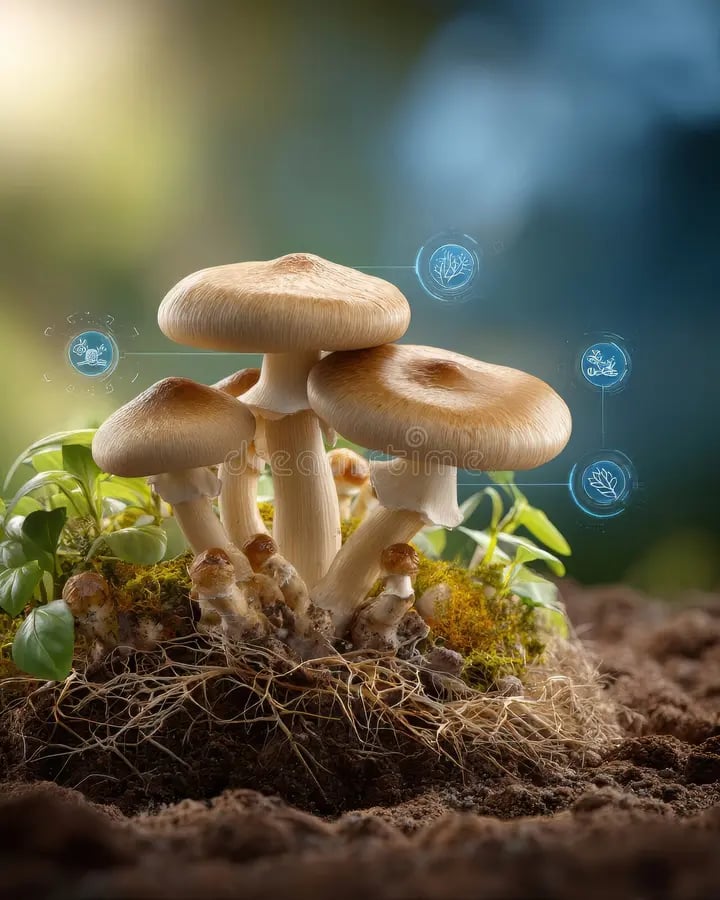
Using Agricultural Waste to Grow Mushrooms Sustainably Discover how agricultural waste can be transformed into high-quality mushroom substrate. Learn how oyster, shiitake, and Lion’s Mane mushrooms turn straw, sawdust, and coffee grounds into sustainable gourmet food. MYCOACADEMY MYCOACADEMY- SUBSTRATE 3/9/2026 2 min read Sustainability is no longer just a trend — it’s a necessity in modern agriculture. One of the most exciting examples of circular food production is the use of agricultural waste as mushroom substrate . Instead of discarding materials like straw, hardwood sawdust, or coffee grounds, mushroom growers can transform these byproducts into nutritious gourmet mushrooms. Species such as oyster mushrooms, shiitake, and Lion’s Mane are natural decomposers, uniquely capable of converting plant waste into high-value food. This is not just efficient — it’s regenerative. What Is Agricultural Waste in Mushroom Cultivation? Agricultural waste refers to plant-based byproducts that remain after harvesting or food processing. For mushroom farming, common sustainable substrate materials include: Wheat, barley, or rye straw Hardwood sawdust from forestry operations Corn cobs and husks Sugarcane bagasse Spent coffee grounds Soybean hulls These materials are rich in cellulose, hemicellulose, and lignin — complex plant fibers that many fungi naturally break down. Why Mushrooms Are Perfect for Upcycling Waste Mushrooms are not plants. They are fungi, and their ecological role is decomposition. Their mycelium produces enzymes that digest woody and fibrous materials, turning waste into: Edible fruiting bodies Nutrient-rich compost after harvest Organic matter that improves soil health This process is a powerful example of a circular economy model in agriculture — waste becomes food, and the leftover substrate becomes soil amendment. Best Agricultural Waste Materials for Gourmet Mushrooms Straw Straw is one of the most widely used substrates for oyster mushroom cultivation. It is inexpensive, abundant, and easy to pasteurize. Best for: Oyster mushrooms Maitake mushrooms Fast production cycles Low-cost scalable farming Environmental benefit: straw is a crop byproduct that would otherwise be burned or left to decompose inefficiently. Hardwood Sawdust Hardwood sawdust, especially from oak or beech, is ideal for shiitake and Lion’s Mane. Best for: Shiitake Lion’s Mane King oyster Environmental benefit: sawdust is a byproduct of sawmills and furniture production, meaning no additional trees are harvested specifically for mushroom farming. Coffee Grounds Used coffee grounds are increasingly popular in urban mushroom cultivation. They are already pasteurized during brewing and contain nitrogen that supports mycelial growth. Best for: Oyster mushrooms Urban farms Small-scale circular food projects However, coffee grounds are best mixed with straw or sawdust to improve structure and reduce contamination risk. Environmental Benefits of Using Agricultural Waste 1. Reduces Landfill Waste Organic waste in landfills produces methane, a powerful greenhouse gas. Upcycling agricultural byproducts into mushroom substrate reduces this burden. 2. Lowers Carbon Footprint Local substrate sourcing minimizes transport emissions and supports regional agricultural systems. 3. Improves Soil Health After mushroom production, spent substrate can be composted and returned to fields as organic fertilizer. 4. Supports Regenerative Agriculture Mushroom farming fits perfectly between forestry, farming, and food production — connecting industries in a sustainable loop. Challenges to Consider While using agricultural waste is sustainable, it requires proper preparation: Straw must be pasteurized Supplemented sawdust must be sterilized Materials must be fresh and mold-free Moisture levels must be controlled (around 60–65%) When managed correctly, contamination risk remains low and yields remain high. The Future of Sustainable Mushroom Farming Globally, research continues to explore new agricultural residues suitable for mushroom production. According to the Food and Agriculture Organization of the United Nations (FAO) , agricultural byproduct utilization is a key strategy for improving sustainability in food systems. Here is their website if you want to know more. Final Thoughts Using agricultural waste to grow mushrooms is more than a clever farming technique — it’s a model for the future of sustainable food production. By transforming straw, sawdust, and other byproducts into gourmet mushrooms, growers create a system where waste becomes nourishment, and agriculture becomes more resilient. For farms supplying home cooks and chefs, this approach offers not only environmental responsibility — but also a powerful story of sustainability that customers increasingly value. Want to learn more about us ? This will interest you. Premium Quality We grow exotic mushrooms innovatively and locally! Contact
Using Agricultural Waste to Grow Mushrooms Sustainably